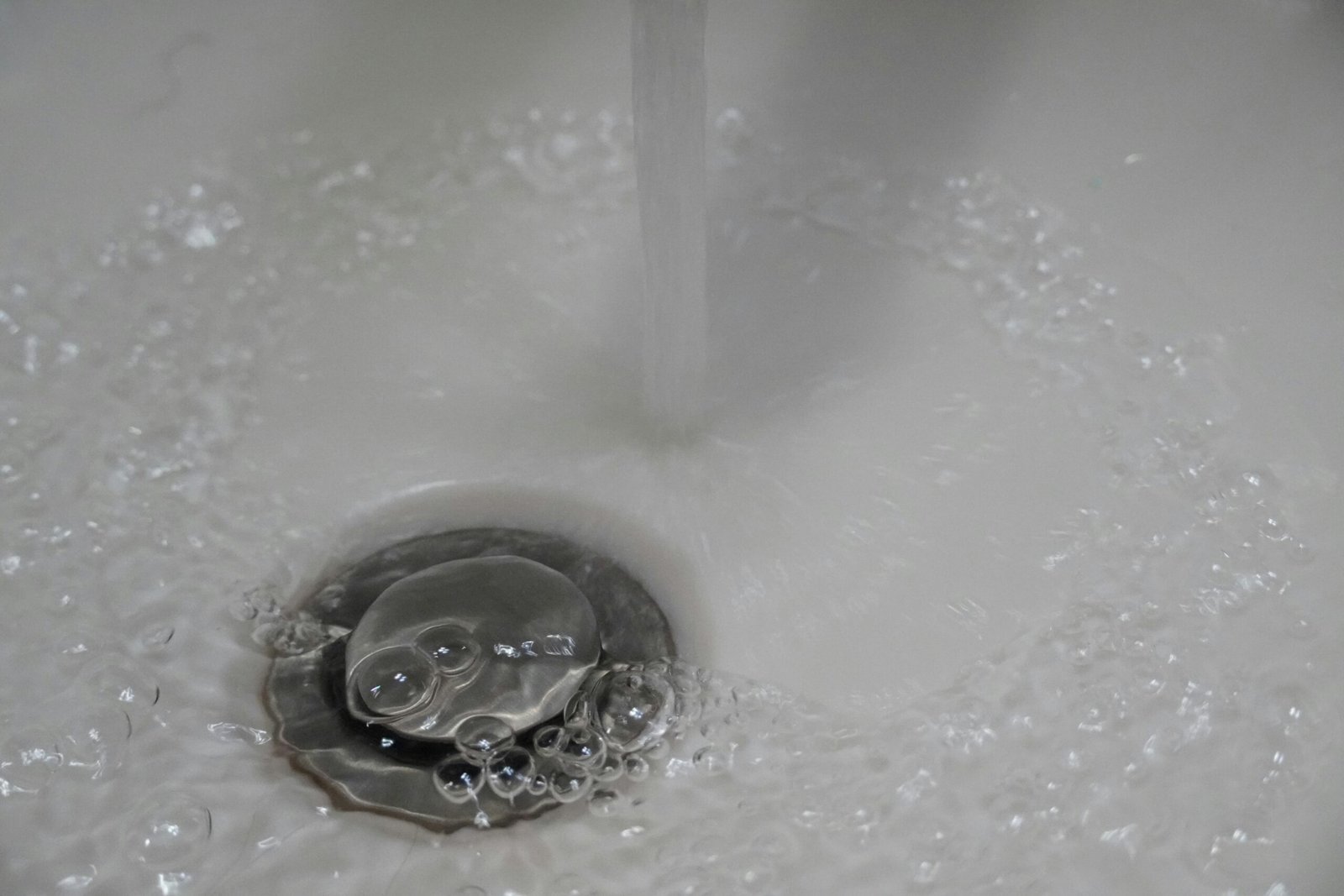
How to Fix a Slow-Draining Bathroom Sink
Reading time: 5 minutes
Skill level: Beginner
Cost: $0 to $15
A slow-draining bathroom sink almost always has one cause: hair and soap scum sitting just below the drain opening or in the P-trap underneath. You can fix this without chemicals, without calling anyone, and usually without tools.
Quick answer
Remove the drain stopper if there is one, then use a zip-it tool (a thin plastic strip with barbs) or needle-nose pliers to pull out the hair clog sitting just below the drain opening. If that does not restore full flow, clean the P-trap underneath the sink. Both jobs together take about 15 minutes.
| Item | Details |
|---|---|
| Time required | 10 to 20 minutes |
| Skill level | Beginner |
| Estimated cost | $0 to $10 |
| Tools needed | Zip-it tool or pliers, bucket, gloves |
| Most common cause | Hair and soap buildup near the drain opening |
Why bathroom sinks drain slowly
Hair is the main culprit. It collects on the drain stopper, around the drain crossbars, and just below the opening where it mats together with soap scum and toothpaste. Over weeks, it forms a plug that restricts flow without completely blocking it.
The P-trap, the curved pipe under the sink, collects whatever makes it past the drain opening. Grease from face products, soap residue, and debris build up in the bend over months.
Chemical drain cleaners dissolve some of this, but they do not remove the physical hair mass. They also degrade rubber drain seals over time and can cause problems if you later need to snake the drain. Physical removal is faster and does no damage.
Step 1: Remove and clean the drain stopper
Many bathroom sinks have a pop-up stopper: a rubber or plastic plug that lifts and lowers via a rod connected to a pivot arm under the sink. This stopper collects hair directly.
To remove it: Pull straight up. Some lift out freely. Others require a quarter-turn before lifting. If yours will not lift out, look under the sink for a horizontal pivot rod going into the drain pipe. Unscrew the retaining nut by hand, pull the rod out, and the stopper will lift free from above.
Clean the stopper thoroughly. The amount of hair and soap scum on a stopper that has never been cleaned is usually surprising.
Step 2: Clear the drain opening with a zip-it tool
A zip-it (also called a drain snake strip or hair removal tool) is a thin plastic strip with backward-facing barbs. It costs $3 to $5 and is available at any hardware store.
Insert it straight down into the drain opening. Rotate it slightly and pull up slowly. The barbs catch hair and pull it out. Do this two or three times until nothing more comes up.
No zip-it? Push a wire coat hanger straight, bend a small hook at one end, and use that instead. It is less effective but works for surface clogs.
Step 3: Clean the P-trap if flow is still slow
If cleaning the drain opening did not fully restore flow, the P-trap needs attention.
Place a bucket under the curved pipe beneath the sink. Unscrew the two slip nuts (the threaded collars at each end of the curved section) by hand, turning counterclockwise. If they will not move by hand, wrap a cloth around them and use slip-joint pliers gently.
Lower the curved section into the bucket. Empty it and scrub the inside with a bottle brush. Rinse with hot tap water and hold it up to the light to confirm it is clear end to end.
Check the rubber washers inside each slip nut before reassembling. If they are cracked or flattened, replace them ($1 to $2 each) to prevent leaks. Reattach the P-trap, hand-tight plus a quarter turn, and run the tap for a full minute to check the connections.
Step 4: Test and prevent
Run the tap on full. Flow should be noticeably better. If it is still slow, the blockage may extend into the wall pipe. Feed a 25-foot drain snake into the opening where the P-trap connects to the wall.
To prevent it recurring, fit a drain hair catcher over the opening. They cost $5 to $8 and catch hair before it enters the pipe. Empty it weekly.
Costs
| Method | Cost |
|---|---|
| Zip-it tool | $3 to $5 |
| Drain hair catcher (prevention) | $5 to $8 |
| Replacement P-trap washers | $2 to $4 |
| New PVC P-trap assembly | $8 to $15 |
| Plumber for drain clearing | $100 to $250 |
When to call a Plumber
- Multiple sinks, showers, or toilets drain slowly at the same time
- A 25-foot drain snake does not reach or clear the blockage
- The drain gurgles persistently after cleaning the P-trap (possible vent pipe issue)
Frequently asked questions
How often should I clean a bathroom sink drain?
Pull out the stopper and remove hair every two to three months. Clean the P-trap once a year. With a hair catcher in place, you can extend both intervals significantly.
Can I use baking soda and vinegar to fix a slow drain?
The fizzing reaction can loosen light soap buildup on pipe walls. It will not remove a hair clog. Use it as a monthly maintenance flush after physically clearing the drain, not as a substitute for physical removal.
The drain is clear but the sink still drains slowly. What else could it be?
Check the vent pipe. A partially blocked vent changes the air pressure in the drain system and slows flow. The symptom is a gurgling sound when the sink drains. This needs a plumber to check the vent pipe at the roof.
Related articles
- How to clean a P-trap
- Why is my sink gurgling?
- Why does my drain smell like sewage?
- The complete guide to home plumbing
Sources
- American Society of Plumbing Engineers (ASPE) – residential drain maintenance standards
- US Consumer Product Safety Commission (CPSC) – chemical drain cleaner safety warnings
- Plumbing-Heating-Cooling Contractors Association (PHCC) – drain clearing methods