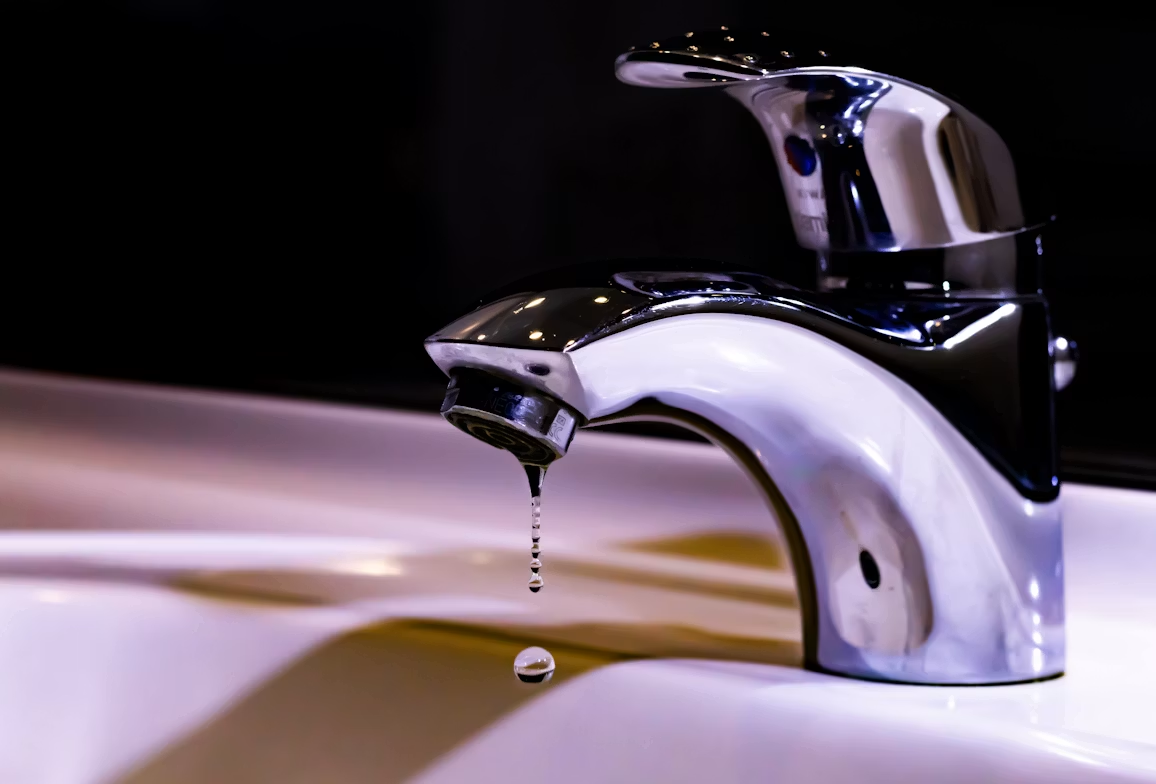
How to Fix a Leaky Faucet
Meta description: Fix a dripping faucet yourself in under an hour. Learn how to identify your faucet type, replace the right part, and stop the leak for good.
Reading time: 8 minutes
Skill level: Beginner
Cost: $5 to $30
A dripping faucet may seem like a minor annoyance, but it can waste a surprising amount of water. According to the EPA’s WaterSense program, a faucet dripping once every second can waste around 3,000 gallons of water per year.
Fortunately, most faucet leaks are inexpensive parts that you can replace yourself in under an hour.
Quick answer
Most leaky faucets are caused by a worn washer, damaged O-ring, or failing cartridge inside the faucet handle.
Turn off the water supply valves under the sink, remove the handle, replace the faulty part, and reassemble the faucet.
| Item | Details |
|---|---|
| Time required | 20 to 45 minutes |
| Skill level | Beginner |
| Estimated cost | $5 to $30 |
| Tools needed | Screwdriver, adjustable wrench, pliers |
| Most common cause | Worn washer or cartridge |
Why is my faucet dripping?
A faucet drips because one of its internal sealing components has worn out.
The exact part depends on the faucet type:
- Compression faucets: worn rubber washer
- Cartridge faucets: damaged cartridge seals
- Ball faucets: worn springs, seats, or O-rings
- Ceramic disc faucets: damaged seals or ceramic cartridge
Step 1: Identify your faucet type first
Getting this right before buying parts saves time and frustration.
| Faucet type | How to identify it | Most common failure |
|---|---|---|
| Compression | Two handles that tighten as you turn them | Rubber washer |
| Cartridge | Single or double handles with smooth movement | Cartridge |
| Ball | Single handle that pivots in several directions | Springs, seats, O-rings |
| Ceramic disc | Wide cylindrical body with single lever | Ceramic cartridge |
Still unsure?
Remove one handle after shutting off the water:
- A threaded brass stem with a rubber washer usually means compression.
- A plastic or brass cylinder indicates a cartridge faucet.
Signs you need to repair a faucet
- Water drips from the spout after shutting it off
- The faucet leaks around the handle
- Water pools around the faucet base
- The leak only happens in certain handle positions
- Your water bill has increased unexpectedly
What you’ll need
Tools
- Flathead screwdriver
- Phillips screwdriver
- Adjustable wrench
- Slip-joint pliers
- Needle-nose pliers (optional)
- Small bucket or towel
- Cloth to protect finishes
Replacement parts
- Faucet washers ($1 to $3)
- O-rings ($3 to $5)
- Replacement cartridge ($10 to $30)
- Ball faucet repair kit ($10 to $20)
- Plumber’s silicone grease
Safety note
- Turn off both hot and cold shut-off valves under the sink.
- Turn them clockwise until they stop, then open the faucet to release pressure and drain remaining water.
- Place a towel underneath the sink to catch drips.
Homeowner tip: If your shut-off valves are difficult to turn or show signs of corrosion, consider replacing them while you already have access under the sink.
Step 2: Remove the faucet handle
Most handles hide the mounting screw beneath a decorative cap.
- Pry off the cap with a flathead screwdriver.
- Remove the screw underneath.
- Pull the handle upward.
If the handle is stuck because of mineral buildup, see our guide on How to Remove a Stuck Faucet Handle.
Before removing any additional parts, take a photo of the assembly. It makes reassembly much easier.
Fix 1: Replace a washer in a compression faucet
Compression faucets are among the easiest faucets to repair.
- Unscrew the valve stem.
- Remove it from the faucet body.
- Locate the rubber washer secured by a small brass screw.
- Replace the washer with an identical size.
A worn washer often appears:
- Flattened
- Cracked
- Hardened
- Misshapen
Apply a thin layer of plumber’s grease before reinstalling.
Reassemble the faucet and test.
Fix 2: Replace a cartridge faucet
Cartridge faucets use brand-specific parts.
Common brands include:
- Moen
- Delta
- Kohler
- American Standard
- Pfister
After removing the handle:
- Remove the retaining clip or retaining nut.
- Pull the cartridge straight upward.
- Match it exactly with a replacement.
Apply plumber’s grease to the rubber seals before installing the new cartridge.
Tip
Many Moen faucets include a lifetime warranty on cartridges. Contact Moen customer service with your faucet model number before buying a replacement.
Fix 3: Repair a ball faucet
Ball faucets contain several components that wear together:
- Springs
- Valve seats
- O-rings
- Ball assembly
Because multiple parts usually fail at the same time, replacing everything together is recommended.
Purchase a repair kit designed for your faucet brand.
- Remove the handle.
- Unscrew the cap and collar.
- Lift out the ball assembly.
- Replace all components from the kit.
Fix 4: Replace worn O-rings
If water leaks around the handle rather than from the spout, worn O-rings are usually responsible.
Common symptoms include:
- Water beneath the handle
- Moisture around the base
- Leaks only while the faucet is running
O-ring kits typically cost $3 to $5.
Always lubricate new O-rings before installation.
Step 3: Reassemble and test
Reinstall the handle and decorative cap.
Slowly reopen the shut-off valves and test the faucet.
Check for leaks:
- At the spout – No dripping should occur.
- Around the handle – No moisture should appear.
- Under the sink- Inspect all supply line connections. A piece of toilet paper works well for detecting tiny leaks.
What if the faucet still drips?
If replacing the washer or cartridge does not solve the problem, the valve seat may be damaged.
The valve seat is the surface that the washer or cartridge seals against.
Over time, mineral deposits and corrosion can cause:
- Pitting
- Uneven surfaces
- Poor sealing
Some faucets allow the valve seat to be replaced using a valve seat wrench.
If yours does not, replacing the faucet may be more practical.
Common mistakes
1. Buying the wrong cartridge
Many cartridges look nearly identical but are not interchangeable.
Always verify:
- Brand
- Model number
- Stem length
- Orientation
2. Installing seals dry
Dry rubber seals wear prematurely and may leak immediately.
Use plumber’s grease on all rubber parts.
3. Overtightening parts
Excessive force can:
- Crack plastic components
- Damage threads
- Tear new washers
Snug is enough.
4. Forgetting to clean mineral buildup
Old deposits can prevent new parts from sealing properly.
Clean all surfaces before installing replacement components.
Repair costs
| Repair | DIY cost | Plumber cost |
|---|---|---|
| Washer replacement | $1 to $3 | $80 to $120 |
| O-ring replacement | $3 to $5 | $80 to $120 |
| Cartridge replacement | $10 to $30 | $100 to $175 |
| Ball faucet repair kit | $10 to $20 | $100 to $175 |
| Full faucet replacement | $50 to $300 | $150 to $350 |
Recommended tools and products
Recommended replacement parts
- Universal faucet washer assortment kit
- Korky faucet repair washers
- Moen replacement cartridges
- Delta OEM cartridges
- Silicone plumber’s grease
Recommended tools
- Adjustable wrench set
- Faucet seat wrench
- Needle-nose pliers
- Basin wrench (helpful for full faucet replacement)
When to call a plumber
Call a professional if:
- The faucet body is cracked
- The valve seat cannot be replaced
- The shut-off valves leak or will not close
- Corrosion has damaged internal components
- The faucet is more than 20 years old and repeatedly fails
Frequently asked questions
1. How much water does a dripping faucet waste?
A faucet dripping once per second can waste approximately 3,000 gallons per year, according to EPA WaterSense.
2. My faucet only leaks from the handle. Why?
This usually indicates worn O-rings or stem seals rather than a failed cartridge or washer.
3. Can I repair a faucet without shutting off the main water?
Yes. The shut-off valves under the sink are usually enough. If they do not close completely, shut off the home’s main water supply.
4. Why does my faucet drip only in certain handle positions?
This usually indicates uneven cartridge wear or deteriorated seals. Replacing the cartridge typically fixes the issue.
5. Should I repair or replace the faucet?
Replacement may make more sense if:
- The faucet is over 15 to 20 years old.
- Parts are no longer available.
- Corrosion is severe.
- Multiple repairs have already failed.
Related articles
- How to Replace a Faucet Cartridge
- How to Remove a Stuck Faucet Handle
- How to Clean a Faucet Aerator
- How to Replace a Bathroom Faucet
- Compression vs Cartridge Faucets: What’s the Difference?
- The Complete Guide to Home Plumbing
Sources
- EPA WaterSense: Fix a leak week – faucet drip water waste statistics
- Plumbing-Heating-Cooling Contractors Association (PHCC) – residential faucet repair standards
- American Society of Plumbing Engineers (ASPE) – valve and fixture maintenance guidance