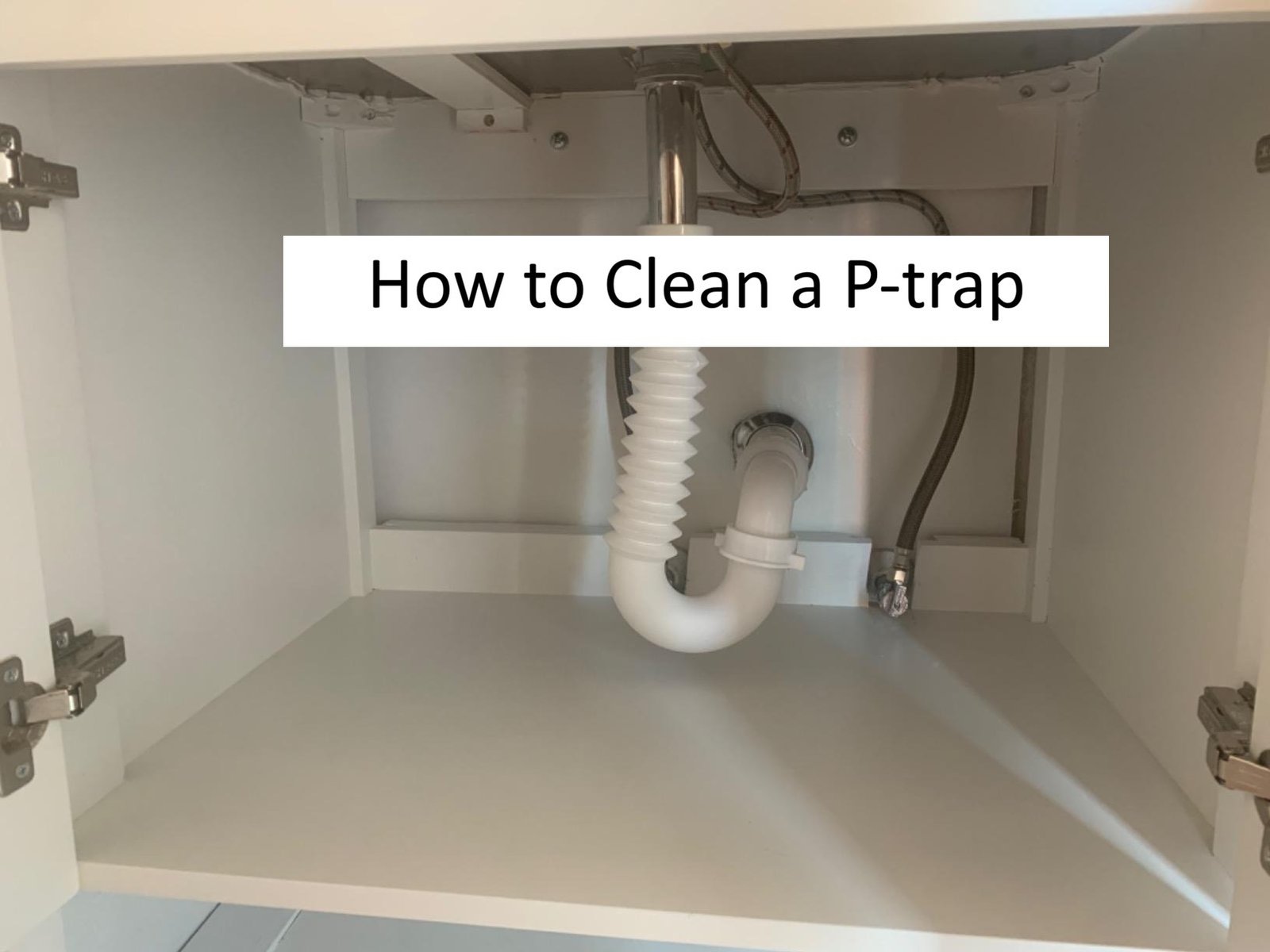
How to Clean a P-trap
Reading time: 5 minutes
Skill level: Beginner
Cost: $0 (cleaning) or $10 to $20 (replacement)
Quick answer
The P-trap is the curved pipe under your sink that holds water to prevent sewer gases from entering your home. It also catches hair, grease, food debris, and soap buildup, making it one of the most common places for sink clogs.
To clean it, place a bucket underneath, loosen the slip nuts, remove the curved section, clean out the debris, and reinstall it. Most homeowners can complete the job in 10 to 20 minutes.
Project summary
| Item | Details |
|---|---|
| Time required | 10 to 20 minutes |
| Skill level | Beginner |
| Estimated cost | $0 to $20 |
| Tools needed | Bucket, gloves, towel |
| Most common blockage | Hair, soap scum, grease |
What is a P-trap, and Why Does It Get Clogged?
The P-trap is the U-shaped section of pipe below a sink drain.
Its primary job is to hold a small amount of water that creates a seal between your home and the sewer system. Without that water seal, sewer gases could enter the house through the drain.
The curved design also causes debris to collect over time.
Bathroom P-traps usually clog with:
- Hair
- Soap scum
- Toothpaste residue
Kitchen P-traps commonly collect:
- Grease
- Food scraps
- Coffee grounds
- Starchy residues such as rice or pasta
How to tell if the P-trap is the problem
| Symptom | Likely cause |
|---|---|
| One sink drains slowly | P-trap or nearby drain blockage |
| Multiple fixtures drain slowly | Main drain issue |
| Bad smell from an unused sink | Dry P-trap |
| Sink gurgles when draining | Partial blockage or vent issue |
| Water leaking beneath sink | Loose connection or failed washer |
If multiple drains in the home are slow at the same time, the blockage is probably not inside the P-trap.
Signs the P-trap needs cleaning
- Water drains slowly
- Drain smells unpleasant
- Sink gurgles during draining
- Clogs repeatedly return
- Water leaks beneath the sink after use
If the sink is rarely used, run water for 30 seconds first.
A dry P-trap often causes sewer smells even when there is no blockage.
What you will need
- Bucket or large bowl
- Old towels
- Rubber gloves
- Wire brush or old bottle brush (for scrubbing inside the pipe)
- Slip-joint pliers (optional)
- Flashlight
Safety note
- Do not pour boiling water into PVC piping.
- Very hot water from the tap is generally safe, but repeatedly pouring boiling water into plastic plumbing components may damage joints or soften certain pipe materials.
- Wear gloves during cleaning, especially in kitchen drains where bacteria and decomposing food may be present.
Step 1: Prepare the space
Remove everything from under the sink. Place a bucket directly under the P-trap because water trapped inside will spill once the pipe is disconnected.
Lay towels around the cabinet floor to catch any drips. Put on gloves. What comes out of a bathroom P-trap is unpleasant.
Step 2: Loosen the slip nuts
Most residential P-traps are held together by two slip nuts. Turn both nuts counterclockwise by hand.
If they are stuck, wrap a cloth around them and gently loosen them using slip-joint pliers.
Avoid excessive force. Plastic fittings can crack.
Step 3: Remove and clean the trap
Lower the curved section carefully and empty its contents into the bucket.
You may find:
- Hair
- Soap residue
- Grease
- Food debris
- Small objects such as jewelry or bottle caps
Scrub the inside thoroughly using a bottle brush.
Rinse with hot tap water and hold the pipe toward a light source to confirm it is completely clear.
Step 4: Inspect the adjacent pipes
While the trap is removed, inspect both openings.
Shine a flashlight into:
- The tailpiece coming down from the sink.
- The horizontal drainpipe entering the wall.
Look for hair, grease, soap buildup, food debris, or other material that could restrict the flow.
If the buildup extends into the wall pipe, use a drain snake before reinstalling the trap. Don’t push debris farther into the pipe if you can remove it instead.
Step 5: Inspect the washers
Each slip nut contains a washer that creates the watertight seal between the P-trap and the connecting pipe.
Replace the washer if it is:
- Cracked
- Flattened
- Brittle
- Missing
Worn washers are a common cause of leaks after cleaning a P-trap. Replacement washers are inexpensive, so it’s worth replacing one that shows obvious wear rather than reinstalling it and discovering a leak afterward.
Step 6: Reinstall and test
Reinstall the P-trap.
Hand-tighten the slip nuts first.
If necessary, tighten slightly further with pliers, usually no more than a quarter turn.
Run hot water for one minute while inspecting all connections.
If you see drips:
- Stop the water.
- Loosen the connection.
- Re-seat the washer.
- Tighten again.
Common mistakes
| Mistake | Result |
|---|---|
| Overtightening slip nuts | Cracked fittings |
| Forgetting the bucket | Water spills into the cabinet |
| Losing the washers | Persistent leaks |
| Using chemical cleaners first | May damage older rubber components |
| Ignoring wall pipe buildup | Clog quickly returns |
When should you replace the P-trap?
Replace the entire assembly if:
- The pipe is cracked
- Threads are stripped
- Metal pipes show rust or pinhole leaks
- Connections continue leaking after replacing washers
Most PVC replacement kits cost between $8 and $15.
Typical sizes in the United States:
| Sink type | Common trap size |
|---|---|
| Bathroom sink | 1¼ inch |
| Kitchen sink | 1½ inch |
Bring the old assembly to the hardware store to ensure compatibility.
Cost
| Task | Cost |
|---|---|
| Cleaning the P-trap | $0 |
| Replacement washers | $1 to $4 |
| New PVC P-trap assembly | $8 to $15 |
| Plumber to clear a drain | $100 to $250 |
When to call a plumber
Call a plumber if:
- Multiple drains are backing up simultaneously
- A drain snake cannot clear the blockage
- The pipe inside the wall is blocked
- Corrosion or leaks extend into concealed plumbing
- Sewer odors persist after cleaning the trap
Persistent sewer odors may indicate a venting issue rather than a clogged P-trap.
Frequently asked questions
1. How often should I clean the P-trap?
Bathroom sink P-traps usually benefit from cleaning every 12 months. Kitchen P-traps may need cleaning every 6 months because grease accumulates more quickly.
2. Can a P-trap unclog itself?
Rarely. Minor soap buildup may eventually dissolve, but hair and grease typically require physical removal.
3. Can I use chemical drain cleaners instead?
Chemical cleaners may remove some grease and soap residue, but are often ineffective against solid debris trapped in the bend. Repeated use can also shorten the lifespan of certain plumbing components.
4. My P-trap is metal, not plastic. Does it come off the same way?
Yes, the slip-nut method is the same. Metal traps corrode over time, so the nuts may be stiff. Use penetrating oil on the joints and wait 10 minutes before trying to loosen them. Metal traps that show rust or pinhole corrosion should be replaced rather than cleaned.
5. Why does my drain smell even though it drains normally?
The P-trap may have dried out, especially in guest bathrooms or unused sinks. Run water for 30 seconds to refill the trap. If odors continue, the plumbing vent system may need inspection.
Related articles
- How to unclog a shower drain
- How to clear a clogged kitchen sink
- Why is my sink gurgling?
- The complete guide to home plumbing repairs
Sources
- American Society of Plumbing Engineers (ASPE) – residential drain trap standards
- International Residential Code (IRC) Section P3201 – trap requirements for residential plumbing
- InterNACHI: Home inspection standards – drain system inspection standards